Nitrogen feeding in spring in winter cereals

At the end of winter, when temperatures go up, a transition to the resumption of vegetation in autumn crops begins.
This is a period during which it is especially important to make an inspection of overwintered crops. Por la survey de campo, a.
What to keep an eye on?
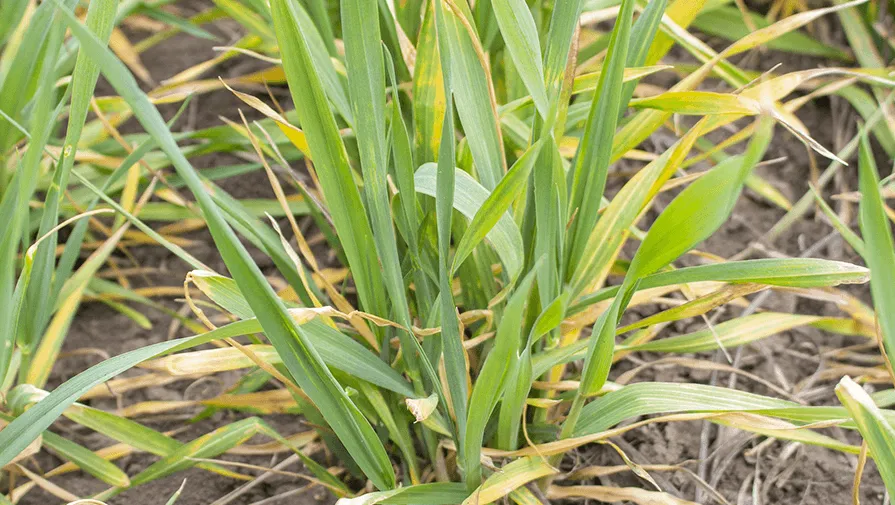
A signal that plants suffer from nitrogen deficiency is the fading of the leaves, which later passes into yellowing and browning (chlorosis and necrosis).
A typical symptom is also the retention of crop growth as a result of which the formation of green mass is inhibited and the yield is reduced.
An excess of nitrogen, often caused by unilateral fertilization with the element, also has an adverse effect on crops. It is characterized by a strong growth of green parts and lengthening of vegetation. A softening of tissues (they become hydrophilic) is often observed, which predisposes plants to laying and increases their susceptibility to diseases and pests.
Ahead of placing the machines in the field, we must have made some important decisions:
- At what point to apply nitrogen?
- What fertilizer to use?
- By what norm?
Choosing the right fertilizer, adapted to the soil type and conditions, guarantees that the element will be efficiently absorbed by the plants. The application of the product concerned, at the right time and at the right dose, ensures optimal crop development.
At the end of the “fraternization” phase, wheat's need for nutrients increases. If we allow it to go into “spinning” with insufficient nitrogen supply, then we will inevitably observe a negative manifestation on the crop.
Dans cette fait, l'entrada en la campo en la primavera deve ser bien planada. Feeding too early is ineffective - when it is still cold and the plants are at rest. The presence of snow cover or too high soil moisture is also required. In questi caso, risco di perdita di grande perdita di nitrogenu presentato, come un nutrizione incompletata del piante.
As for the fertilizers most often used in the spring feeding of winter cereals, we should certainly mention urea and ammonium nitrate.
In recent years, liquid nitrogen fertilizer, calcium-ammonium nitrate, as well as nitrogen fertilizers with various coatings and inhibitors are gaining more and more popularity. A.

- UreaNitrogen fertilizer is preferred because it has the highest content of the element — 46%. It is essentially an organic fertilizer containing nitrogen in formul amide (NH2). Once in the soil, under the action of enzymes and external factors, it passes into ammonium (NH4), and later in nitrates (NO3) form. A (). A (pH>7.5), (NH3) is wide.
- Ammonium nitrate (ammonium nitrate)is perhaps the most familiar nitrogen fertilizer. It contains a total 34%nitrogen in Ammonium (NH4) and Nitrate (NO3) form. After getting into the soil, it dissolves quickly, providing plants with affordable food. A,. Et n'est pas à l'utilisation sur les soils avec une réaction acidée, et avec l'utilisation prolongée est à la relation avec l'introduction de calcium (Ca).
- In recent years, more and more farmers are betting on liquid nitrogen fertilizer urea ammonium nitrate (UAN). It contains a total 32%nitrogen, which is in Ammonium (NH4), Nitrate (NO3)and Amide (NH2) form. Altre avanzate di fertilizante di nitrogenu liquido sono sono perdita di nitrogenu, come la alta efficienza anche su soldi con una risposta alkalina. It can be applied both soil and foliar, and its compatibility with herbicides and other products increases its profitability. It is undesirable to apply it in cold weather, as it is possible to freeze, and its dosage should be carefully determined so as not to provoke burns.
- Calcium ammonium nitrate (CAN)is indispensable in the acid reaction of the soil solution. It contains a total 27%nitrogen in Ammonium (NH4)and Nitrate (NO3)form and 15% Ca. The calcium content in the product favorably affects the soil reaction and improves nitrogen absorption. It is appropriate to apply at the first entry in spring and later during the growing season.
Fertilizers, in which the nitrogen molecule is encapsulated by various coatings (sulfur, polymers, chemically controlled release, nitrification and urease inhibitors), provide more complete plant nutrition.
A la relevo de l'elemento a través de degradación slowly, que es una causa de pêvajoyên biyolojîk, kîmyewî û fîzîkî. Such products are most effective in conditions where the risk of nitrogen losses is high — light, waterlogged soils. It is cost-effective to use the same fertilizers when re-nitrogen fertilization is not planned, as well as an alkaline pH of the medium.
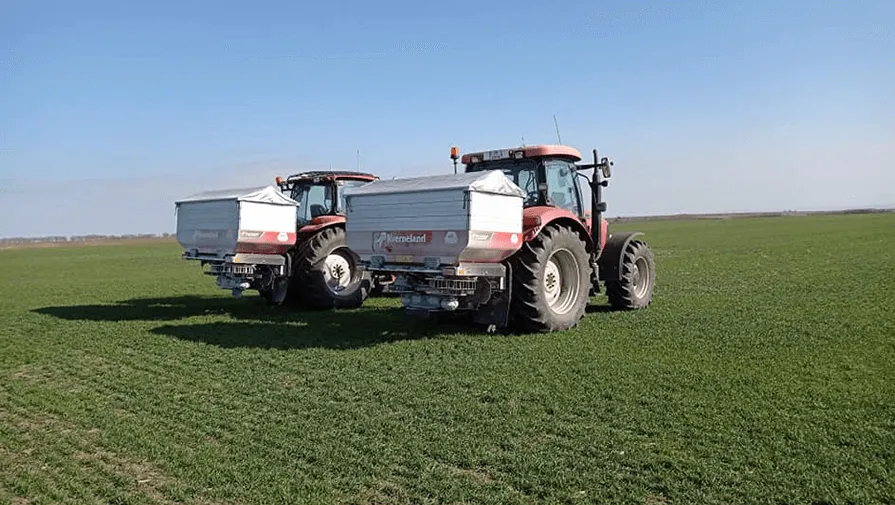
A. Some of them are — the tillage system; the amount of fertilizers applied in the fall; the duration of winter; the rainfall and available moisture in the soil at the time of application; the phase in which the plants are located after dormancy.
Az, soil analysis. Sólo en este modo, a ser garantire que a una decisió informada, a salvar os custos de fertilizantes, y a la fin de la temporada, a ser croonado con éxito.
Other articles
Field Innovations: Chomstil is among the first farms in Bulgaria with a Kverneland Alentix spreader
.webp)