Why is it important to know if our soils are salty?
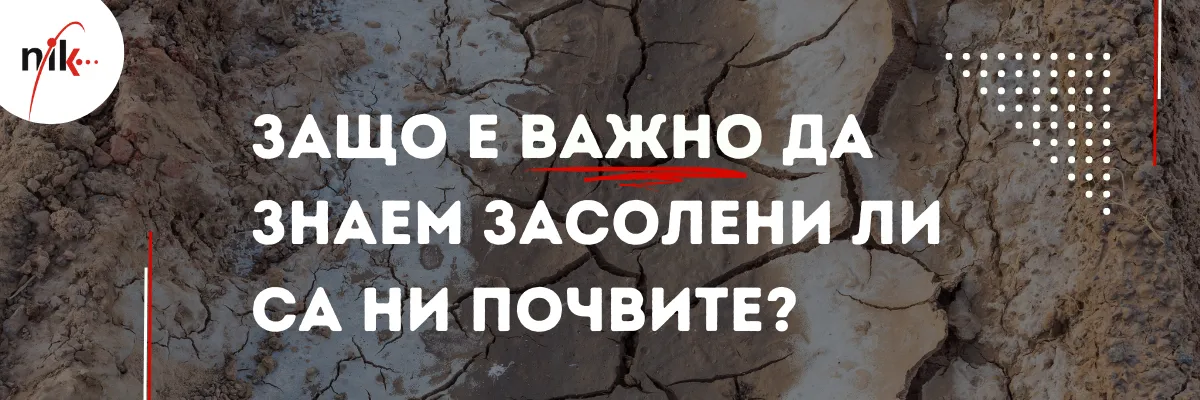
Salinization is a serious problem that can significantly compromise our yield. As a result of the high salt content, plants wilt, the activity of soil trace elements is greatly reduced, and soil particles are dispersed, leading to degradation.
What is electrical conductivity?
Electrical conductivity measures the ability of water in soil to carry an electrical charge. Therefore, the presence of water is a necessary condition for the process to take place.
What is the relationship of electrical conductivity to agriculture?
In agriculture, electrical conductivity serves as a measure of the salinization or accumulation of water-soluble salts in the soil. These salts are potassium (K+), magnesium (Mg2+), calcium (Ca2+), chlorides (Cl-), sulfates (SO4 2-), carbonates (CO3 2-), bicarbonates (HCO3 -) and sodium (Na+). A soil can be salted because of its natural features. The climate, the topography of the terrain, the soil-forming material have an influence here. But salinization can also be induced by human activity. Increased risk of salinization is observed mainly in irrigated areas, but also in areas with poor drainage or excessive use of fertilizers or wastewater.
How can we deal with the salinity of the soil?
The introduction of tolerant crops in the crop rotation and precise management of the irrigation regime are only some of the best practices with which we can solve the problem. However, we should not forget that its timely establishment by conducting the accurate analysis also plays a key role. When analyzing your soils, we from NICK, we advise you to trust only certified laboratories, distinguished by the exact specialists. If you want to find out more about the topic or have questions, you can contact our agronomists.
Other articles
Field Innovations: Chomstil is among the first farms in Bulgaria with a Kverneland Alentix spreader
.webp)