Why do farmers choose Kverneland loaders?
Working volume and the most optimal working width
Any conversation begins with what is the most optimal volume and working width of the roosters, to which farmers orient themselves? However, there is no unequivocal answer here, since everything depends on the size of the farm, the bulkiness of the massifs or the absence of one, and on what rate it is fertilized.However, it turns out that the width of the fertilization coincides with the width at which it is sprayed, so that the same navigation lines can be used and fewer traces can be made in the block itself and Here we came to the conclusion that working widths of 24 or 36 meters are quite enough for any farmer to realize his goal of less tire tracks on the property.
Sectional control at Kverneland
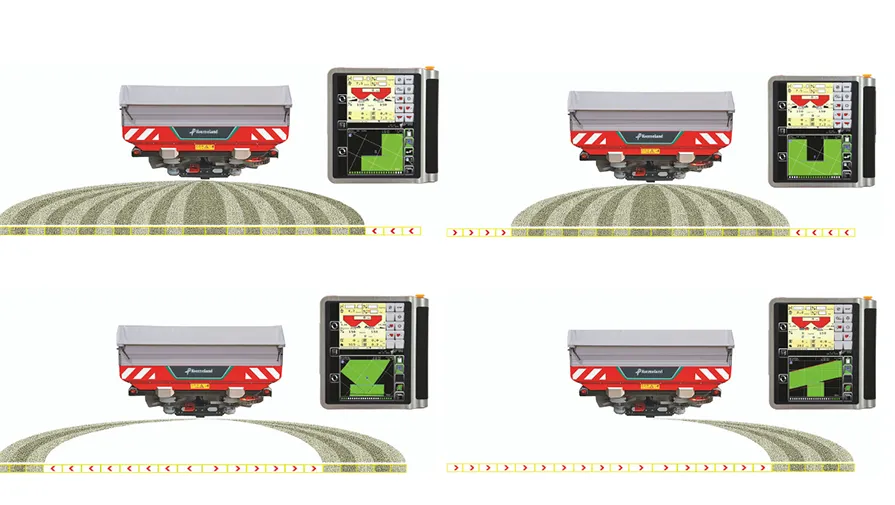
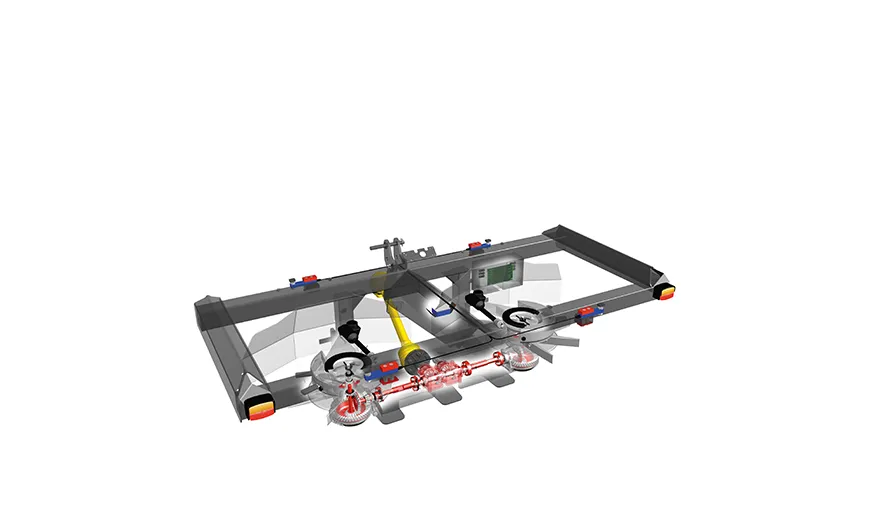
It turned out that it does not matter if we fertilize at 34, 30, 33 or 36 meters. It is important that the mower has precise sectional control, since it is this that guarantees 100% coverage in irregularly shaped plots, and we all know that there is no farm that does not have at least 5 of these. In addition to 100% coverage of the area, sectional control also helps to reduce costs. Everyone knows that the more precise it is, the greater the savings. The size of the sections in Kverneland's roasters is 1 meter, and their control takes place automatically through the milling machine terminal, and in the discs themselves, one of the two actuators controls the sections and makes a smooth transition between them.The braking technology of the sections of the lathe allows staggered braking of all sections from left to right and from the right of left, including going through the middle and fertilizing with less than half the working width. Thus, even the smallest corners do not remain non-fertilized and at the same time the overlap at them is minimized. Another distinctive feature of the Kverneland grinders is the control of the fertilizer drop point by etc. Geopoint, which automatically calculates the point at which the mower should start fertilizing when entering the plot. This ensures accurate fertilization at the end and eliminates fertilizer that could fall outside the fertilization area.
How can we be sure that we are applying the correct norm?
The applied rate of fertilization is something that the computer sets and the inventory performs, but there is always the normal human doubt whether the inventory fulfills its set rate exactly, and how does it actually know how much fertilizer is being thrown in every minute? The answer is — the unique weighing system, which consists of weight cells 4 cells on which the entire hopper lies, which continuously measures the weight of the fertilizer in the hopper, and by means of a reference sensor adjusts the cell readings depending on the slope, vibration and shock variations, thus providing the most accurate information about the available fertilizer weight. The applied norm is achieved with maximum accuracy precisely due to the information about the available kilograms in the hopper at any given moment.
Why is it good to calibrate our mower when changing fertilizer?
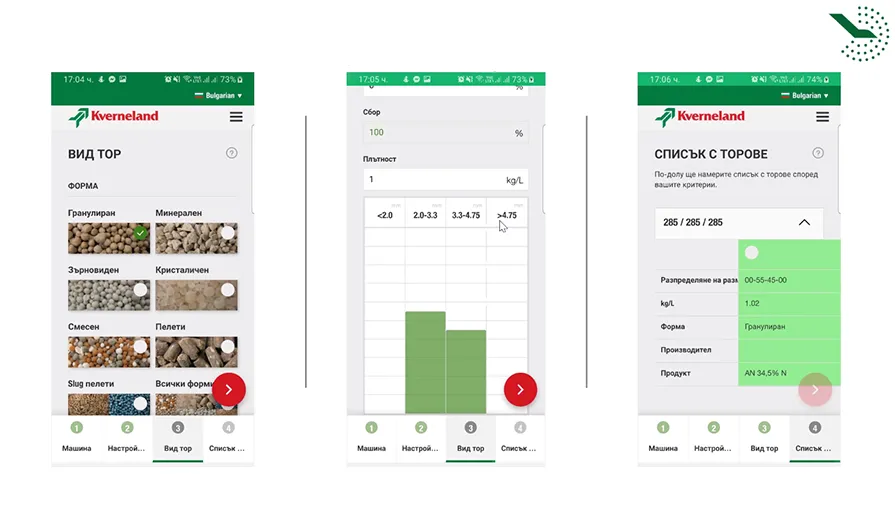
Maximum precision when fertilizing is the goal of every farmer. However, to make sure that you achieve it, it is advisable to calibrate your mower when changing the type or manufacturer of fertilizer you are using. Why do we need this? The answer is simple — to know which fertilizer the mower will work with. Calibration is not a complicated procedure and does not take time, but it guarantees the precise distribution of fertilizer in the field. Through a specially designed test with buckets in which the fertilizer is collected along the working width of the field, the actual distribution of the fertilizer can be verified and the coefficient of variation can be calculated using a computer to calculate the coverage. Kverneland spreaders achieve a low coefficient of variation, which means that they make an extremely even distribution of fertilizer over the entire working width - on slopes, on uneven terrain and rubbing, as well as when performing sectional control.The video shows in a few easy steps how to perform the calibration and the tub test: https://youtu.be/5PHdYFXuoLcСтъпките for calibration is easy, such as the settings are generated through a mobile application, in which you enter the information about the type of fertilizer, the distribution of the different fractions of the granules and the hectolitre number. You can use the predefined settings for the one closest to your fertilizer and you only have one step left and that is entering the settings in the display that controls the mower no matter if it is Kverneland or Trimble.
Precision fertilization with automatic sectional control
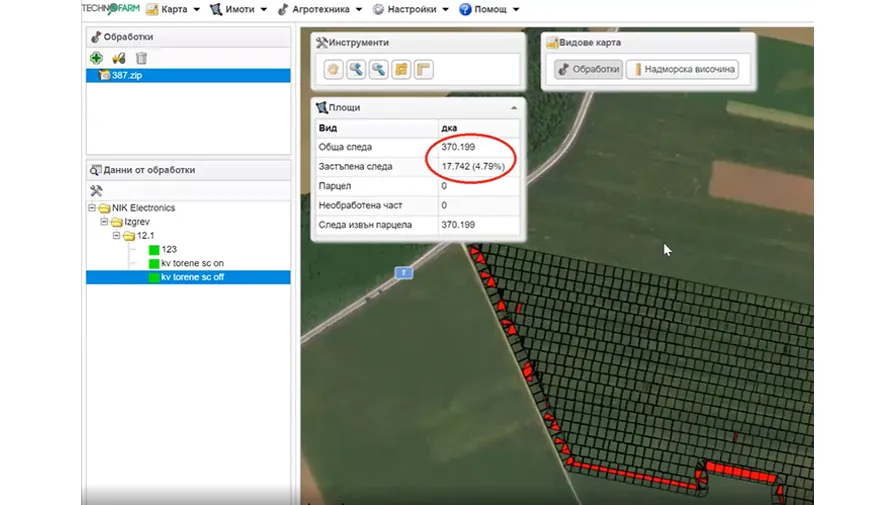
Precision fertilization allows saving from 4 to 15% of applied fertilizers through the use of automatic sectional control. The percentage of fertilizers saved depends on the shape of the block and the number of sections that the mower manages. In a relatively correct block in shape, in which we apparently should not have any problems with prefertilization and overlap, we see that 0.67% is the overlap when using sectional control, and without it - 4.79%. This seemingly small savings in a block with 370 acres is in the amount of 250 BGN at a fertilizer price of 800 BGN/ton.
Expect more information about saving on fertilizers by applying them with a variable rate in the next material on the topic of threshers!
Other articles
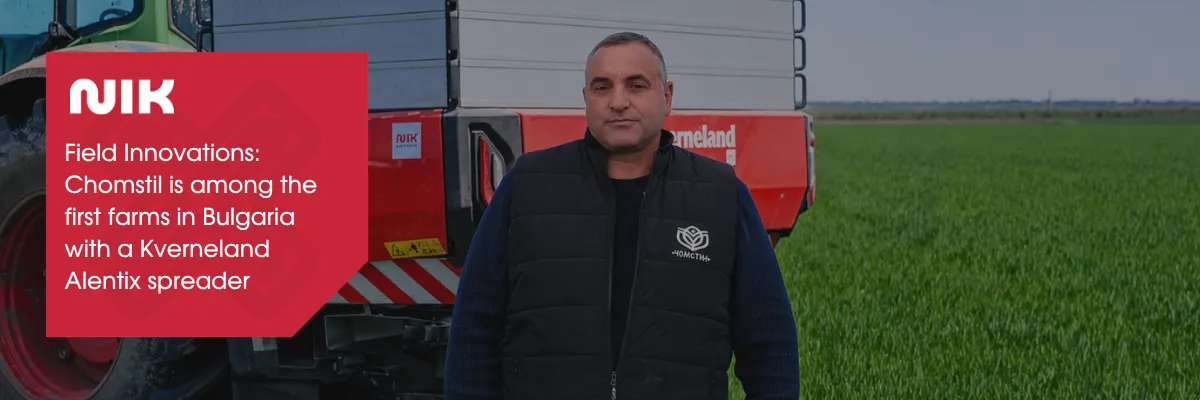
Field Innovations: Chomstil is among the first farms in Bulgaria with a Kverneland Alentix spreader
.webp)