Webinar: Strip-Till in Bulgaria - what do farmers and agronomists share?
In recent years, the methods of minimal tillage have become increasingly popular in our country, in order to protect the soil and reduce costs. Strip-Till is one of these technologies. This is what prompted the NK to hold another Webinarwith farmers and agronomists to share their expertise on their experience with the technology.
Guests of the discussion were Alexander Dimitrov from PPK Brashlen, Georgi Georgiev from ET Galen Georgi Georgiev, Kiril Zhendov from ET Renaissance and Bozhidar Mitov from BIM AGRO. Moderators of the event were Zornitsa Zlateva and Ivan Chernogorov, product managers in the field of agronomic services and tillage equipment at NIK.
What is Strip-Till?
Strip-Tillis a technology in which we carry out processing only on a part of the soil surface in strips. Untreated stripes are where we accumulate the organic residues of previous crops.
As a technology, the name itself indicates that it is a combination of two different, radically opposite other technologies. One is plowing, in which we cultivate 100% of the soil surface and the other is a technology in which, after harvesting, we sow. We do not have any processing between these two operations and we start the next production cycle much faster.
Zornitsa Zlateva, agronomist at NIK:By combining these two technologies into one, we enjoy the benefits of both. In the area where it is cultivated, in the strips, we use the advantages of plowing technology, namely faster warming of the soil and faster drying in spring, which gives us a faster start of spring crops. On the other hand, the deep tillage that we do in the strips destroys the long-accumulated plow heel.
The advantages in untreated strips are the accumulation of organic mass. In winter, they help to retain snow, since over the years we see that the snows are less and less in our latitudes. In the spring seasons, when we have more rainfall, untreated strips help protect against soil erosion. And also. when the dry summer comes, they keep from excessive evaporation. In this way, they lead to a better balance in the soil, where the soil itself develops better, the microorganisms have a better environment and in general the crops manage to develop better and develop their genetic potential to an increasing extent.

What's a good thing to think about before moving on to Strip-Till? Exactly two things!
The first is to ensurecorrect combination between cultivator and planter. And the second is to have GPS equipment with high accuracy. This ensures that each subsequent move will be in the tracks of the previous pass. In this way, we will really have processed and untreated stripes. More about their experience and application technologies, share the guests of the event.
The experience of Alexander Dimitrov
The experience of Bozhidar Mitov
The experience of Georgi Georgiev
The experience of Kiril Zhendov
The first of our guests is Alexander Dimitrov, manager of PPK Brashlen. It cultivates 12,000 acres in the area of the village. Ivy, Ruse region.
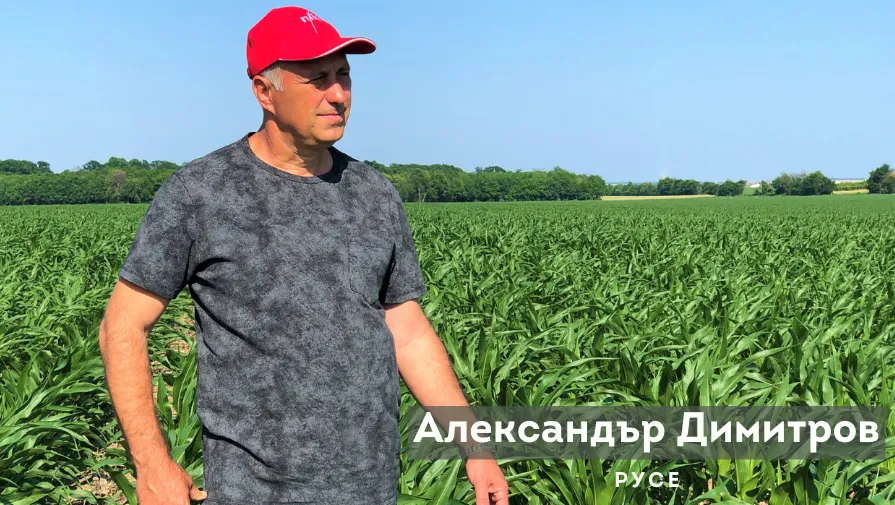
What does the experience of Alexander Dimitrov show?
After seeing how others are implementing Strip-Till technology around the world, we decided to try 300 acres. Subsequently, we continued to increase the areas and so for the third year now. We are currently on 90% of areas with Strip-Till spring technology. Here are sunflower and corn. Currently, 50% of our areas with rapeseed for the second year are on Strip-Till technology. This is the thing that has helped us reduce costs, increase the time for these treatments and, last but not least, really start thinking about our land, which for years we have been working under a common denominator and nobody thinks about it.
Bozhidar Mitov, manager of BIM AGRO, who cultivates land in 23 villages near Targovishte, shares his experience.

What does the experience of Bozhidar Mitov show?
Back in 2002-2003, I saw the technology in a company that had made such inventories, but then there was still no GPS. I started practicing the technology, but I have a larger volume and I work with 24-row planters, 3 in number. After a while, however, we gave up, as evasion of the planter in the lateral areas resulted. Now that more modern things have appeared and mainly GPS, I am launching Strip-Till technology again. I'm thinking of implementing it mainly in corn. There are a lot of positives — cost reduction, that's very important. In addition, the heavy equipment that is needed is reduced, which in turn is more expensive and more difficult to maintain. Spring cultivators are also dropped. Only a little more chemistry comes at the expense of that.
Georgi Georgiev, manager of ET Galen Georgi Georgiev, shared his expertise on Strip-Till technology. It cultivates about 35,000 acres of land in the Haskovo region.
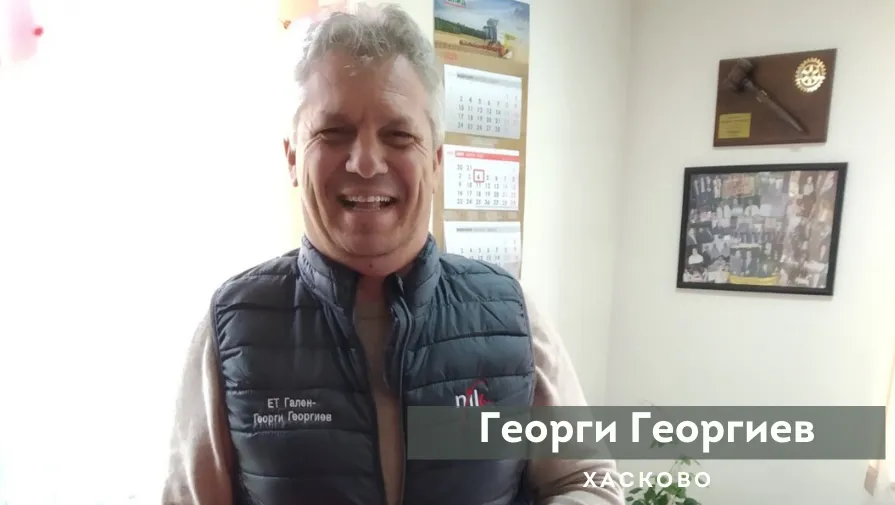
What does Georgi Georgiev's experience show?
For the past 10 years, we have been constantly making some calculations and constantly looking at how to minimize costs and increase profits on the farm. This was the first reason to think about Strip-Till. In our country, spring crops are mainly sunflower and sorghum. Corn can hardly be looked at because of the lack of moisture and on irrigated fields. The main crop in our crop rotation is rapeseed. There are years with very severe drought, for rapeseed we can hardly cultivate the areas properly to be able to sow it on time. So last year we made the necessary investments to start minimizing processing and move to Strip-Till. I watched a lot, I thought a lot and I think that this is exactly the technology that gives the positive from No-Till and from conventional treatments — the best for our conditions. My idea is to apply the technology mainly to rapeseed and of course, to sunflower as a spring crop.
The experience and knowledge gained over the years is shared by Kiril Zhendov, manager of ET Renaissance. It cultivates 26,000 acres in the village. Lozenets, Dobrichko.
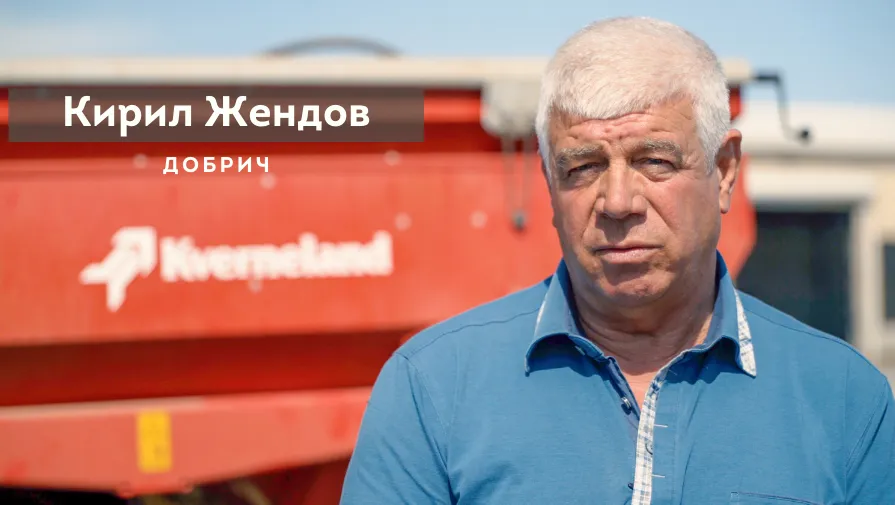
What does the experience of Kiril Zhendov show?
2001 was a major drought and corn yields were almost zero. Since then, I have been looking for technology that retains moisture. From 2001 until 5 years ago when I discovered Strip-Till, I have been looking, observing, thinking about which technology to implement on my farm. The main reason for this was my desire to reduce costs. Over time, Strip-Till technology combines the advantages of the two technologies — conventional processing and No-Till, which lead to results where there is no collapse, as is the case with No-Till. It improves soil structure extremely quickly, preserves the soil microbiology very well and increases it, but the most important thing that led me to try the technology was the cost. Currently, about 80% of our areas are Strip-Till. I have been implementing the technology with the help of Kverneland for 5 years and I think that from next year we will 100% switch to Strip-Till. Virtually all the inventory that we used before becomes redundant.
Alexander Dimitrov shared some of the attempts he has made over the years.
Alexander Dimitov, farmer:With Strip-Till technology, work is much easier and more convenient. In addition, moisture in the soil is preserved. This is also shown by our experiments, which we have observed in real conditions. After heavy rains, fields that are plowed and with standard technology remain flooded for hours in torrential rains, while Strip-Till fields absorb water much faster. And one more experiment — a field that was with a puddle, for years when we cultivated it conventionally, it held water. For three years, this puddle in the Strip-Till field has disappeared.
Download all the material here:
If you want to learn about the Strip-Till experience of other farmers, or if you yourself have something to tell, you can join the specially created Facebook group “Good practices in Strip-till tillage”: https://www.facebook.com/groups/899643363827369/
Other articles
Field Innovations: Chomstil is among the first farms in Bulgaria with a Kverneland Alentix spreader
.webp)