On the road to sustainable agriculture — why is it important not to leave the soil “bare”?

The maintenance of the soil all year round coveredis a practice that is key in conservation agriculture. Implementing it on the farm has a number of benefits, including:
✅ Protection of soil from heavy rains, overheating and wind
✅ Prevents erosion and removal of the fertile layer
✅ Prevents crust formation and water runoff
✅ Reduces harmful agrophone (weeds, diseases and pests)
✅ Increases organic matter content
✅ Creates a favorable environment for the life of beneficial microorganisms
There are two main types of soil cover:
- Live vegetation sown in the field
- Mulch or plant residues scattered over the soil
The combination between the two systems is the most optimal option to keep the soil always covered.

Plant residues, left after harvest, are a good way to keep the soil covered. Crops that form a large vegetative mass (corn and sorghum) are preferred in this regard. The addition of mulchfrom sources external to the field (mowed grass or cut branches of trees and shrubs) is another method by which we can provide the ground cover.Sowing cover cultureduring the growing season (in row spacing) or after harvesting the main crop is also a measure preferred among farmers who strive for sustainable agriculture. Applying this practice is more difficult, especially in areas with little rainfall. Regardless of which option you choose, having a ground cover is always better than not having it.In case you want to learn more about regenerative practices and how to keep the soil healthy — keep an eye on the publications related to the topic “On the road to sustainable agriculture”.
For more information on soil health, you can contact our agronomists.
Other articles
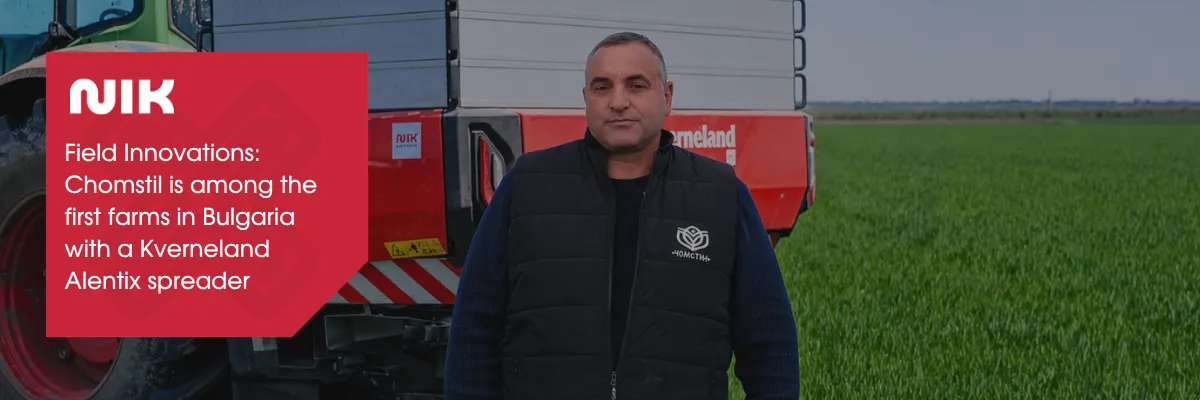
Field Innovations: Chomstil is among the first farms in Bulgaria with a Kverneland Alentix spreader
.webp)