How to use Pessl Instruments weather stations on our farm
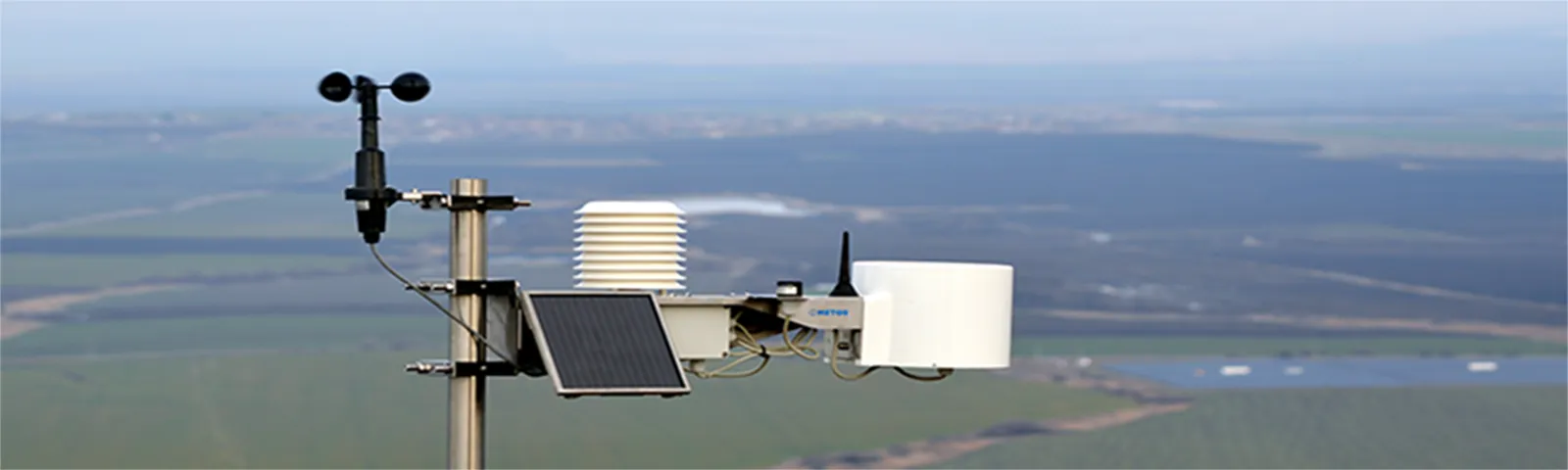
For more than 30 years, Pessl Instruments weather stations have provided a way to make informed decisions about agricultural treatments and farm activities. Thanks to weather stations, we know when, where and if we need to take agronomic action to keep the plants healthy. This happens through the information that we receive from the station installed on the territory of the farm, where agricultural areas are cultivated.Depending on the sensors that are installed on the station, the following information is obtained:
- Detailed weather forecast with high accuracy for 7 days ahead — it is possible using the precise positioning of the station, based on which the forecast is calibrated using the information from its sensors.
- Spray forecast — automatic assessment by the station of a suitable spray time every 6 hours for 7 days ahead
- Fertilization forecast - automatic evaluation of the effectiveness of carrying out fertilization for 7 days ahead
- Harvest time estimation forecast — automatic assessment of harvest conditions by hours for 7 days ahead
- Crop disease risk assessment - more than 40 predictive models of disease development are included for various types of crops such as rust, fusarium, sclerotinia, gray rot, alternaria, mildew, etc. In this way, the agronomist gets a reasoned opportunity to plan agrotechnical measures on the basis of climatic data and the risk of eradication.
- Current climate data on the farm every hour - they are always and everywhere with you - via Internet platform and GSM applications
- Frost warning to protect plants
- Automatic sms, which is generated automatically upon assessment by the station of such danger
- Measuring soil temperature — necessary for estimating sowing time and germination potential
- Calculation of accumulative temperatures — to estimate the occurrence of different phenological phases in crops
- Soil moisture and obtaining irrigation rate recommendation — automatic recommendation based on station data depending on the crop grown
- Climate history - data storage, which enables data to be analyzed in order to plan activities more correctly for each subsequent year
- Data on air temperature and humidity, as well as carbon dioxide in warehouses
All these climatic and soil data on the areas where we grow crops will help us in choosing a crop variety and how to plan our activities depending on the development phase, saving resources and time and keeping the plants healthy.
Other articles
Field Innovations: Chomstil is among the first farms in Bulgaria with a Kverneland Alentix spreader
.webp)