

How to properly configure our sprayer?

It is important for the size of the tank to be consistent with the size of the blocks to be processed, the rate with which it is sprayed and the length of the rods, so that the amount of solution that fits into it ends at the end of the plot, and not in the middle - this optimizes the idle costs of the machine and reduces crop deadening. The size of the tank also affects the parameters of the chassis - the larger it is, the larger the chassis is needed. The larger tank gives greater autonomy to the machine by reducing the time required for stops for filling and loading with chemicals. The length of the rods corresponds to the multiplicity of the spring and autumn planters used. The aim is to cover an exact number of rows in spring crops and possibly an exact number of autumn planters if rail sowing is practiced in autumn trees. Larger rods also give higher productivity, because with one stop of the machine a larger area of 24 or 42 meters is covered and thus the time required for spraying larger plots is reduced. When the terrain is uneven it is good to choose a suspension in the center of gravity such as AXIAL, which picks up vibrations from the terrain and stabilizes the bars. The number of sections as well as their distribution are also important in order to reduce overlap. Most often at the end of the bars are smaller in size sections while in the central part they are larger. There is one rule here: the largest section should be less than twice the size of the smallest section.The pump is also selected in relation to the length of the wings such as the longer they are, the greater the flow rate of the pump must also be in order to be able to spray at high speed of movement of the machine.When choosing the ground clearance of the machine in self-propelled sprayers is it is good that it is consistent with the type of row crops that are sprayed at an advanced stage of vegetation. Practice shows that the optimum height when spraying sunflower, corn and rapeseed is 1.40-1.60 m. Depending on the type of hybrids, the higher or lower variant is chosen.
Other articles
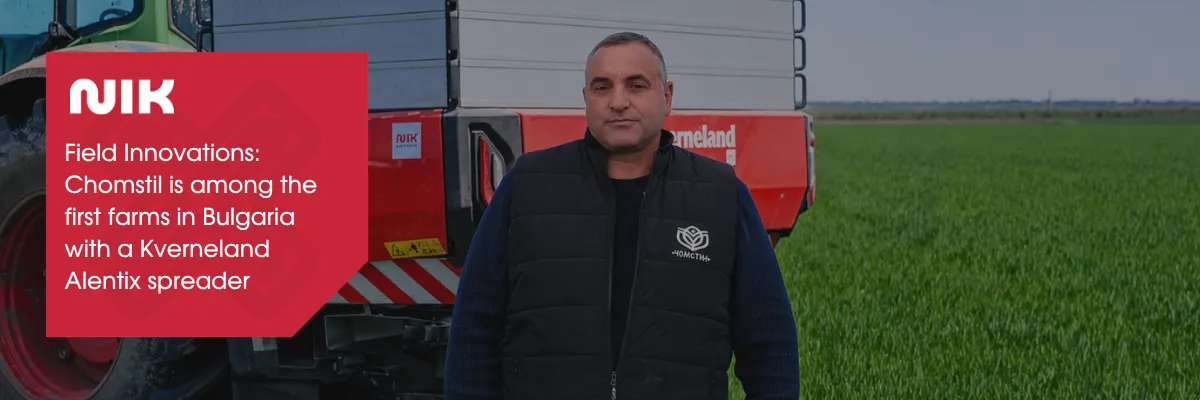
Field Innovations: Chomstil is among the first farms in Bulgaria with a Kverneland Alentix spreader
.webp)


