

No-till - what is important to know about it?

No-till is short for no-tillage.
The concept of agriculture without tillage (or with minimal tillage) is much older than the conventional one. Millennia ago, agricultural practices were dependent on the primitive nature of tools, or lack thereof. In the modern world, the driving force for implementing no-till technology is the economic benefits as well as those for nature.
Agricultural practices for tillage
The main soil treatment in conventional agriculture is plowing. It is carried out before sowing the plants and aims to turn the topsoil. Its benefits are several — aeration of the soil, incorporation and mixing in depth of fertilizers, loosening the soil, destroying weeds, diseases and enemies.
However, along with its pluses, plowing also causes quite serious damage — it creates favorable conditions for erosion, because it destroys the integrity of the soil cover, destroys the living environment of microorganisms and releases carbon into the air, which contributes to the so-called greenhouse effect (global warming).
The implementation of no-till farming, along with its benefits, would lead to solving some of the problems mentioned.
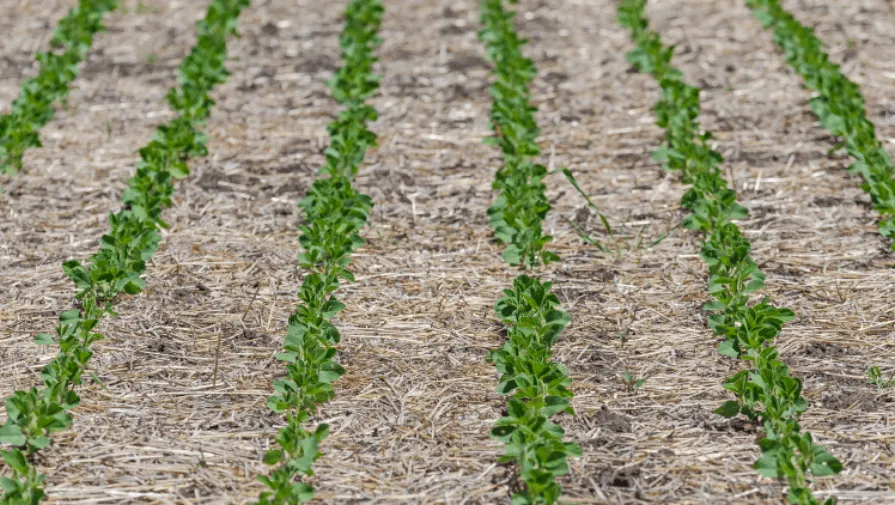
Principles of the no-till system
Minimization of processing
Bezoran technology, unlike conventional, strives for minimal or zero soil disturbance. In short — with the help of specialized inventory, the seeds are sown in newly made furrows, then they are dulled and covered. The effect is less compaction of the soil and a weaker impact on its integrity (soil integrity is disturbed only in the area where the seed is laid). Another plus is that, along with the seeds, fertilizers can also be applied, which are usually of a lower rate, since they are laid in a targeted manner.
Partial or strip treatments can be included between the sowing of the different crops. Thus, larger quantities of fertilizer can be fed or used to incorporate plant residues when they are too abundant and there is a danger of creating conditions for the multiplication of pathogens and/or enemies.
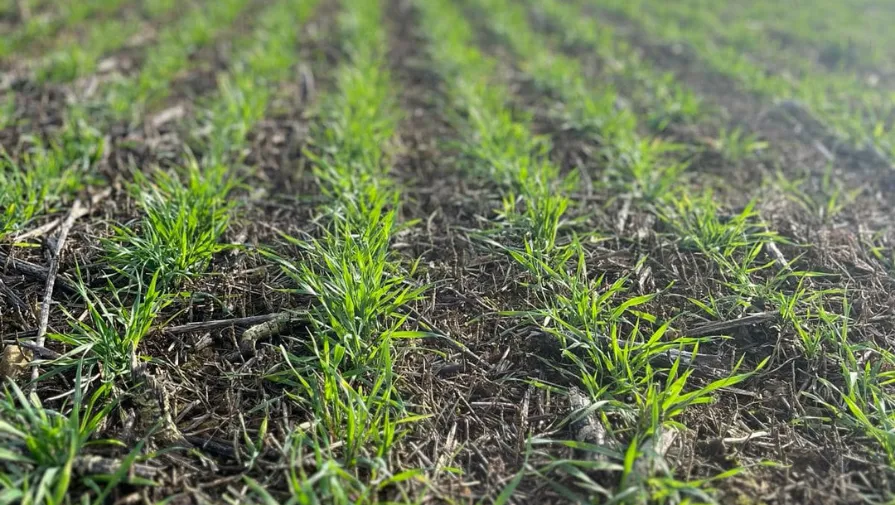
Row Spacing Coverage
Since the bezoran technology excludes the possibility of the weeds being destroyed mechanically, another solution is required. A good option is to cover the row spacings with straw or mulch. In this way, not only the development of weed vegetation is suppressed, but also moisture is retained in the soil.
Crop rotation
Crop rotation is a familiar and very useful practice not only in baseless technology. Compliance with crop rotation, in which crops of fused vomit, trench and leguminous crops are alternated in one field is particularly important because:
- Reduces pressure from weeds, diseases and pests
- Reduces the risk of soil erosion
- By including legumes, soil fertility is increased
How do we reduce soil compaction by no-till?
Frequent tillage leads to the destruction of its structure, which reduces its ability to withstand movement and loads. When the ground is not tilled or entry into the field is minimized the pressure decreases, as does compaction.
How does no-till protect soil from erosion?
In plowing, the topsoil is displaced in depth, replacing it with bare soil removed from the deeper horizon. Due to the lack of vegetation cover and strong soil structure, this layer is quickly carried away by winds and water (especially on steep terrain).
By applying the no-till system, the soil is spared from permanent tillage, which preserves the integrity of the surface layer, whereby the negative effects of winds and water are minimized.
Why does no-till technology reduce the greenhouse effect on Earth?
By means of plowing, carbon from the deep layers is shifted to the surface of the soil. The released carbon becomes a food source for plants, which is positive. However, in the absence of vegetation, this same carbon binds to oxygen from the atmosphere, resulting in the formation of carbon dioxide (CO2).
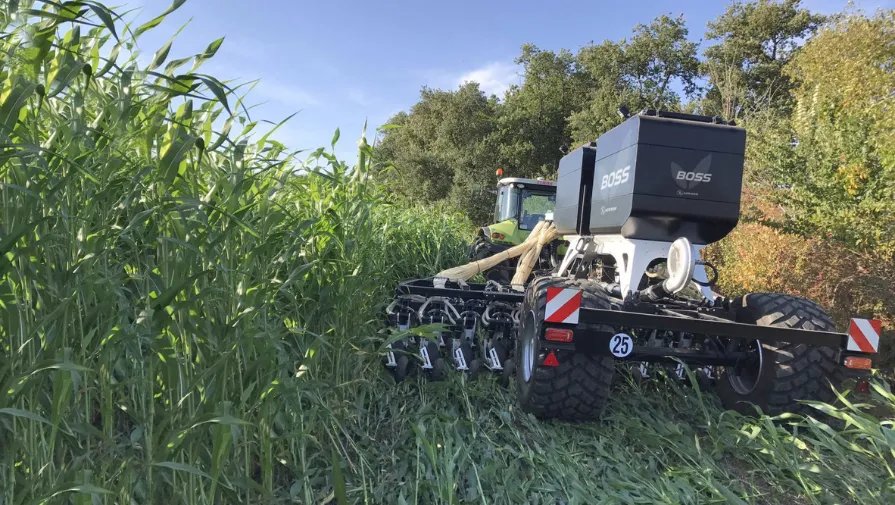
How does no-till help preserve soil fertility?
Through no-till farming, soil fertility is successfully preserved. Soil cultivation negatively affects the balance of microorganisms that are an integral part of it, helps mechanical control of pests, but along with this destroys beneficial species.
Additional economic benefits of groundless technology:
- Savings on investment
- Reducing the amount of fuel used in agriculture
- Less time to work in the field
- Need for less manpower
Challenges of no-till technology
Investment in new equipment
The initial investment required to purchase new equipment can be a challenge on the path to conservation farming. In general, this money can be recovered quickly at a higher yield, obtained at lower costs for fertilizers, fuel, labor. By selling old and already unnecessary equipment, a step towards the goal can also be taken.
Investing in more knowledge
In many cases, people do not have the desire to absorb new, more closely specialized, knowledge and for this reason continue to work in their familiar way. Nowadays, access to information is easier than ever and there are a number of platforms that can serve farmers.
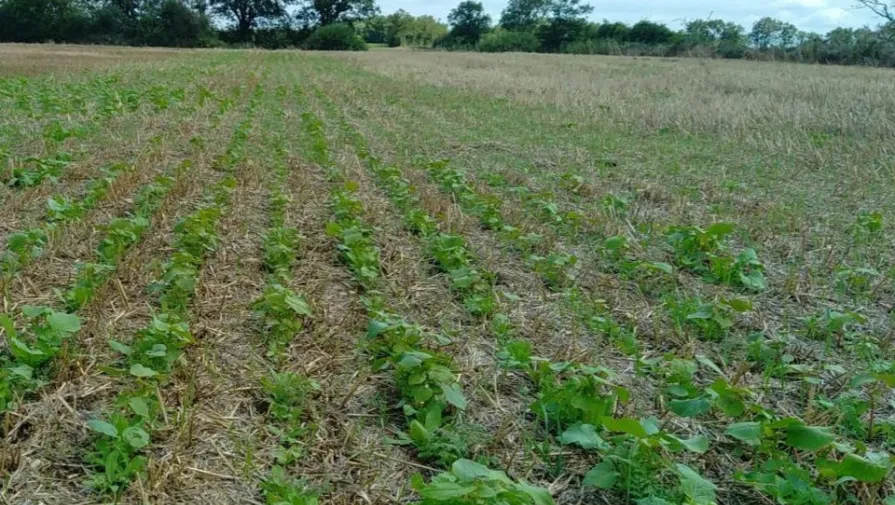
Probability of formation of water gutters
Since the field is not continuously leveled by plowing, it is possible, with long-term application of the bezoran technology, to form gutters (natural ditches) where the water flows. Maintenance of cover crops, mulching and different directions of movement in the field are some of the measures that can minimize the problem.
Use of chemicals
No-till technology does not cope well with the presence of weeds in the field (especially rhizomatous). Despite the measures that can be taken in this direction, such as maintaining vegetation in the row spacings, the use of herbicides still remains the most effective option to combat unwanted vegetation in the block.
Future in no-till farming
Given the ever-changing world in which we live, one thing is clear: the baseless system is not a panacea, but it certainly has its place in the future of agriculture. On the one hand, it saves us a lot of costs, and on the other hand, it eliminates the negative impact of agricultural practices on the environment.
Combining and alternating different technologies is the key to achieving sustainable results.
For more useful content, subscribe to our newsletter!
Contact us
Other articles
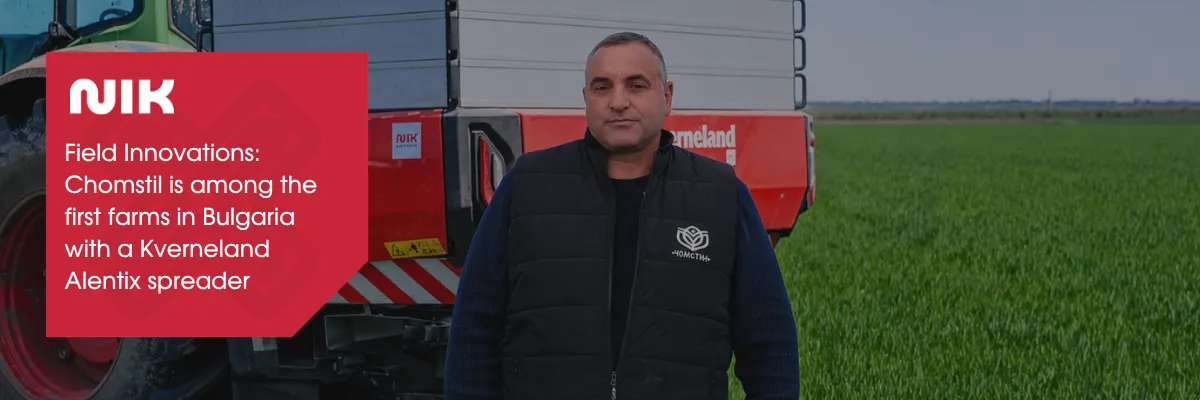
Field Innovations: Chomstil is among the first farms in Bulgaria with a Kverneland Alentix spreader
.webp)


