

Big agricultural data

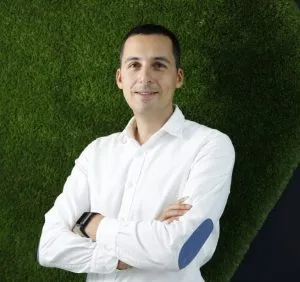
The founders of NIK — Ivo Kumanov and Kaloyan Kumanov together with the partners Kostadin Kostadinov and Svilen Kostov reveal how the idea of integrated technological solutions for precision agriculture was born and how it developed. See what they shared in the interview Forbes Bulgaria.
Every farmer interested in sustainable business development wants to know what amount of fertilizer, where exactly and when to use it so that he can get a greater yield and, if possible, with less cost.
The Soil Analysis Laboratory of NIK Agro Service in Sofia processes up to 1000 samples per day from different farms in Bulgaria and Europe.
“We are examining the soil for deficits. We can say what amount of fertilizer and with what composition to use in the different parts in the field. If we make a mistake, we put the clients' business at serious risk,” says Ivo Kumanov.
The group of companies founded by him, NIK, creates integrated technological solutions for precision agriculture.

Thousands of farmers are subscribers to GeoScan platform, which gives access to the results of laboratory analyses and indicators of soil condition, meteorological data for the relevant region and carries out monitoring of cultivated areas. For 2019 alone, consolidated revenues from consulting services and distribution of agricultural equipment exceeded BGN 45 million, but what is more exciting for him is that farmers have a real opportunity to optimize their activities. They can save themselves unnecessary fertilizer costs and thus reduce the ecological footprint.
THE COMBINATION OF A POWERFUL SOIL ANALYSIS LABORATORY AND A DIGITAL DATA PROCESSING PLATFORM MAKES A GOOD PRODUCT FOR THE MARKETS IN EUROPE
For the last 18 years, the most essential part of his business and the most difficult is to build trust: “We do not offer miracles, we do not promise top results. Everything requires consistency, and with our help customers make informed decisions.” Often they pay off.
Ivo Kumanov started as a distributor of automation systems for agricultural machinery in 2002. At first he thought only of helping his father, who no longer wanted to be a teacher at the military school in Shumen and took up grain production, but encountered many problems. It cannot determine how much area is plowed and harvested, and therefore does not know exactly how much to pay for the service. At that time, Kumanov was a first-year trade student at UNSS in Sofia and was eager to find a solution. He is used to helping in the family business — he has been working for his mother's beverage company since he was 15 years old.
After some research, he decided to try a manual device for mountaineers, which helps them navigate in wooded areas and has functions to measure areas. When he contacted the manufacturer in the United States, he realized that he had a technological solution to a massive problem of farmers in that period, with which he could do business. Indeed, for 1500 BGN everyone wants to buy the appliance, accompanied by a specially prepared detailed manual with pictures and descriptions. “At one point, I knew who was measuring areas where, because they were calling on the phone to ask which button to press,” Kumanov says.
His small business is developing very well, since the clients are entrepreneurs in other business areas who enter agriculture without the prejudices of old practices, and look for new solutions to current problems. Even then, the agricultural sector in Bulgaria was formed as quite innovative compared to other countries in America and Western Europe with ancestral agriculture. In addition to being open to innovation, people from the farming community communicate a lot. When a farmer in Ihtiman says that he is satisfied, it is heard in Dobrich. Thus, Ivo Kumanov sold several thousand devices with a good margin, but at some point the market was saturated. To continue, it has to offer another technology. From the family farm, which in the years ahead served as an experimental field, they suggested another problem. Usually, when fertilizing, the tractor has to move with a certain turn, but the mechanizer is difficult to orient for the distance. Either he will stand up or he will miss. In both cases, it's not good.
The solution is one navigation device of the American Trimble, with which tractors move semi-automatically.Only one thing is to sell a gadget for 1500 leva, and another - professional equipment for 3-4 thousand euros. In these devices, farmers in the US, Germany and England massively load digital maps for optimized fertilization, which automatically tell the machine where to throw more and where less fertilizer. The principle is very simple - if in one part the field gives birth to 400 kg of grain and in the other 800, then the fertilization must be different. Therefore, the question arises, “if you reap differently, why fertilize the same”, which later becomes the slogan of an advertising campaign of the firm.
These digital maps are prepared individually on the basis of numerous soil analyses, which no one in Bulgaria does. At least not as many as are needed for one card. However, how to make a laboratory, since neither he nor his younger brother Kaloyan, who helps him in business, have the necessary knowledge.
Fortunately, they meet a customer - producer of essential oil cultures - Kostadin Kostadinov, a physicist by education and very advanced in thinking, who is ready to help them with the laboratory.
IN 2009 KOSTADINOV LAYS THE FOUNDATIONS OF NICK AGRO SERVICE AND BECOMES THEIR PARTNER
Together they discuss how to set up a soil analysis factory ready to take on a heavy load when everyone rushes to fertilize at the same time. Before embarking on anything, the three visit one of the largest soil analysis laboratories in the United States with 20,000 samples a day. The Americans helped them adapt many of the methodologies for determining soil nutrient reserves, thanks to which it became possible to draw precise digital maps for variable fertilization in areas of need.
Over time, NIK Agro Service has established a valuable partnership with some of the leading universities, Cornell in the USA and Wageningen in the Netherlands, which are developing new technologies in agriculture and need applied laboratories. Over the years, the small laboratory in the Sofia district “Mladost”, which makes 20-30 samples per day, has become the largest in Eastern Europe, becoming the winner of the Forbes Business Awards 2020 award for Company of the Year in the “Agriculture” sector. Robotic system for 2 million euros spews data around the clock.
On the way forward, Ivo Kumanov makes another bold decision — to include satellite images that show the vegetation index of plants, or more precisely in which area of the field crops develop better. The service is popular in the United States, but not in Europe. The risky venture cost him 80 thousand euros an annual subscription to the provider. “It was a very serious amount for us. We have paid hundreds of thousands of euros over the years, but I am motivated by the belief that these technologies will help farmers increase yield and that there will be returns,” he says. After all, the company is not at a loss, only the profit is small. The great benefit is that when the use of satellite images in agriculture becomes a mass practice, and free of charge, NIK Agro Service is technologically ahead of many Western companies.
The NIK group is growing with another software company, Techno Farm, which handles the huge amount of data.
“We created a platform with satellite images, then digital soil analyses, data from weather stations, from local sensors appeared,” says Svilen Kostov.
He is the manager of Techno Farm and the architect of the GeoScan software system. He graduated in Forestry from the Forestry University in 2004, and his thesis was on the topic of determining forest fire losses based on satellite images, then for 10 years he was engaged in digitization, area measurement, filming, control platforms. Now the data from GeoScanhelp subscribers to respond in a timely manner to the dynamics of agricultural processes and climatic circumstances.
The combination of a powerful soil analysis laboratory and a digital data processing platform makes for a good product for markets in Europe.
While Ivo Kumanov assembled the big picture, his younger brother Kaloyan, who has been in business since he was 17, embarked on a large-scale project in Romania: “We had the opportunity to grow in Russia and Turkey, but we decided that the business environment in Romania is more favorable for foreigners.” In 2015 NIK buys a small Romanian company. The welded team worked at a much lower speed than the Bulgarian, and although Kaloyan Kumanov had to part with all seven people, he decided to take the best of them.
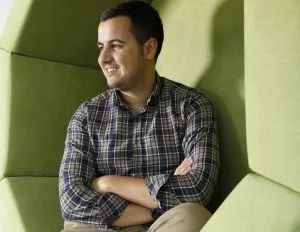
In a short time, he created a working system with 40 employees. This success helped him get into the Forbes “30 under 30” selection in 2016.
The next step in the development is the partnership with Sumitomo, one of the world's largest commercial companies with a diversified portfolio and interests in agriculture. “They need technology services, and we need a partner that can develop the service in many locations. They helped us develop the platform and provided us with access to markets. After that, we started talks about entering Ukraine and several other countries,” says Kaloyan Kumanov. The group already has more than 200 traders, engineers and agronomists in Bulgaria, Romania and Italy.
The achievements of the NIC in Pumaare spotted in Trimble. Ivo Kumanov was invited to Denver to talk to several hundred dealers from the USA and Europe how he can develop a good business in precision agriculture through services: “I did not believe that I would ever tell Americans how we do business in Bulgaria. Their experience has always been a role model for me.” His colleagues from Europe think that once they know how things are going, they can borrow and use the Bulgarian laboratory and software. In Italy, NIK opens its own company. There, it emphasizes the training of farmers in precision agriculture, since without knowledge no technology can be applied adequately. (More than 400 farmers pass through NIK Academies annually.) The local agricultural association also assists in conducting a series of trainings in different regions. As a result, there are many enquiries about who provides this service in Italy and the NIC includes more local partners.
IN GENERAL, THE DEVELOPMENT OF THE AGROSECTOR IS ACCOMPANIED BY THE NEED FOR MORE INNOVATIVE COMPANIES AND YOUNG PEOPLE WITH IDEAS FOR MODERN PRODUCTION OF ECOLOGICALLY CLEAN AND BALANCED FOOD
“We need such people for the expansion,” says Ivo Kumanov. NIK initiated the first Agro hackathon in Bulgaria for young talents with projects in agriculture. At the same time, he notes that agriculture increasingly relies on automation, robotics and artificial intelligence, and much less on humans. Over the years, NIK has installed displays in several thousand tractors and combines ready to move completely autonomously, “which will happen in the next few years” because fewer and fewer young people want to spend their working day in a cab. As long as the legal framework for the use of autonomous machines in the field is ready by then. The Kumanov brothers, together with the National Agricultural Association, lobbied for its creation.
On the other hand, for autonomous machines in the field, good data management is needed (where it should go, what to do) and this is the direction in which they work in the NICs.
The author of the article: Eleonora Tarandova, editor at Forbes
Photos: Ivan Kolovos
Other articles
Field Innovations: Chomstil is among the first farms in Bulgaria with a Kverneland Alentix spreader
.webp)


