Artificial intelligence in the field
Artificial intelligenceArtificial intelligence (AI), sometimes called machine intelligence, is intelligence demonstrated by a machine. It differs from natural intelligence, which is inherent in humans and animals. Leading AI textbooks define the field as the study of “intelligent agents”: any device that perceives its environment and takes actions that maximize its chances of successfully achieving its goals. In other words, artificial intelligence is any system that analyzes the environment and takes actions that are a direct result of that analysis.
However, how does this artificial intelligence manifest itself in the field and what is its place in modern agriculture?
As machines become more capable, tasks that are thought to require “intelligence” are often removed from the definition of AI, a phenomenon known as the AI effect, according to an author unknown to us on Wikipedia. This puts the line between routine and artificial intelligence, like any action that has become widespread, such as optical character recognition, which is now a “routine”. Among some examples of the application of “artificial intelligence” is the autonomous driving of cars.
But where is agriculture as a field for the expression of artificial intelligence?
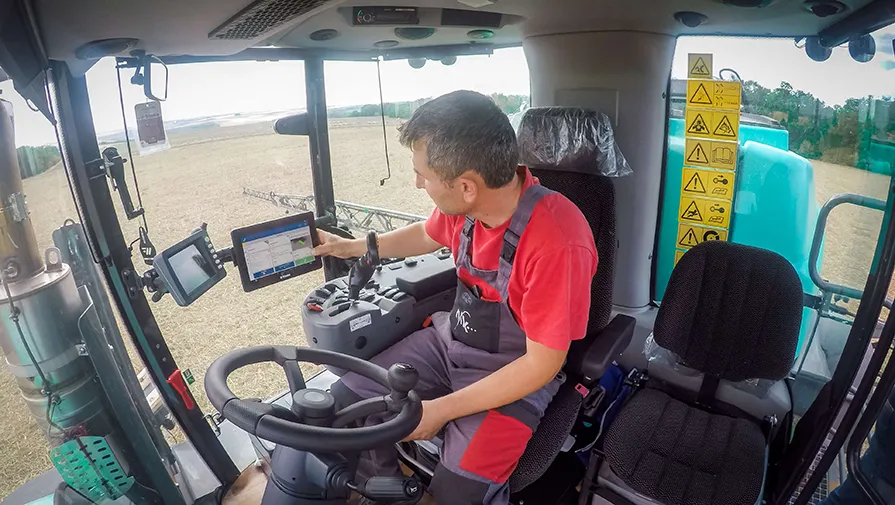
Each of us has often encountered systems that greatly facilitate mechanizers in their work, but we rarely think about whether and which of them are defined as artificial intelligence.
The modern navigation systemsThose who drive their own tractors are unlikely to be classified as artificial intelligence in 2020 because of their ubiquity and the routine they have acquired.
However, for about a year or two, a number of other novelties have been coming in, which can be safely defined as artificial intelligence, and perhaps everyone can think of at least one..
Artificial intelligencein the field of roosts and the application of a variable rate of fertilization based on soil or vegetation maps is something that 5 years ago we considered artificial intelligence, but today it is already a daily routine and even a need for a large part of the farmers.
On the agenda, however, is artificial intelligence in sprayers — their ability to recognize weeds and apply herbicide precisely to areas where enemies are — in real time.
This is exactly the kind of artificial intelligence system we find in sprayers Berthoud.With the help of several French companies creating innovations, the machines can recognize weeds and distinguish them from the main crop. The next step is directly connected to the Straytronic spray system, controlling each of the nozzles individually, which is activated by the computer exactly at the location where the unwanted plant is detected.

On the one hand this extremely innovative system, and on the other very simple, because it is based on technological solutions known and used in sprayers for years — sectional control, but not on groups of nozzles, but on each nozzle separately.
This requires a pump with a large flow rate and constant pressure of the solution in the spray system with the so-called continuous flow of circulation of the solution, which allows a high-frequency opening of Nozzleswith the possibility of a very fast reaction and uniform quality of application of the solution when working on 1, 5 or 30 nozzles of the circuit.
The agronomic and economic benefit of such a system is extremely great. The savings of a preparation depend on the saturation of the weeds, but can reach up to 90%, while the agronomic benefits are qualitative and are reflected in the preservation of the main crop from excessive treatment with preparations.
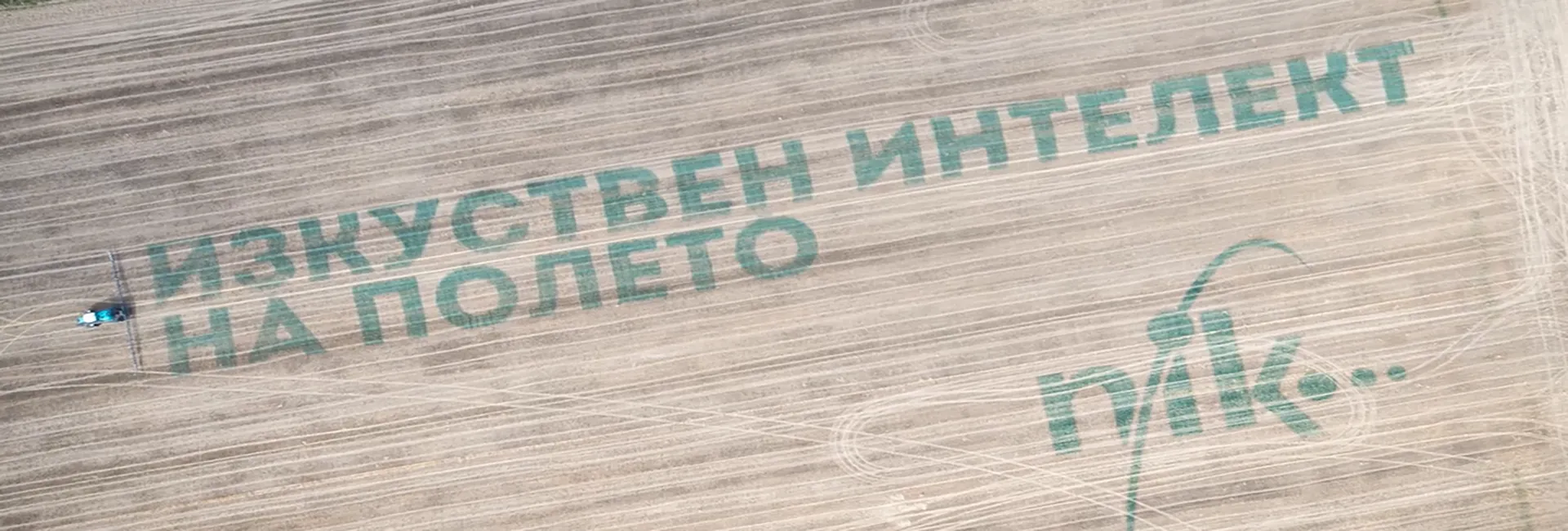
Artificial intelligencealso allows for more non-standard applications of individual nozzle control, such as writing inscriptions on the field with paint or another type of solution, which in itself has no agronomic value, but is extremely pleasing to the eye. In Bulgaria, we have been observing it since the summer of 2019, when the first such projects appeared by farmers who proudly wrote the names of their farms in the field after the end of the harvest.

Other articles
Field Innovations: Chomstil is among the first farms in Bulgaria with a Kverneland Alentix spreader
.webp)