Do You Fertilize Effectively With Phosphorus - Part 1
Costly fertilizers have led a number of farms to switch to technologies that enable them to reduce costs. When it comes to phosphorus application, however, how effective is each of them enough?
Since we at NIK understand plant nutrition, we decided to summarize the advantages and disadvantages of the most widely applied fertilization methods - surface, directed and during sowing.
In the first part of the topic, we will dwell on the behavior of phosphorus in soil. This will make it easier to imagine what happens to the fertilizer in the different import options.
PHOSPHORUS
Phosphorus, which is absorbed by plants, moves to the roots by diffusion. Diffusion is a process in which the ions of a substance move from an area of high concentration to one of low. Its rate depends on several factors, including the mechanical composition of the soil, water content, pH of the solution, compaction and temperature. As a rule, diffusion is higher in soils containing a higher percentage of clay and accessible water, with a pH between 5 and 6, well aerated and at temperatures above 20°C. The distance between the two zones also matters — the larger it is, the more time it takes for the ions to move. And more — crops with a fine root system attract phosphorus more strongly, which facilitates their nutrition with the element.
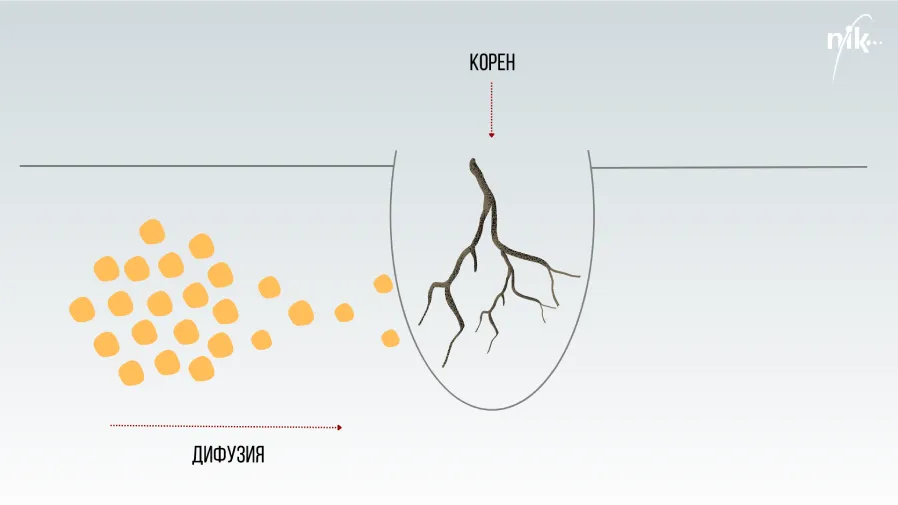
From what has been said so far, we can conclude the following:
Phosphorus ions found in the soil are difficult to move. Therefore, the place where we place the fertilizer in relation to the roots of the plant is a key factor for its effective absorption by the culture.
Follow the page of NICKabout the continuation of the material, in which we will compare the individual options for fertilizing.
If you want to know more about the subject and have any questions, you can contact our agronomists.
Other articles
Field Innovations: Chomstil is among the first farms in Bulgaria with a Kverneland Alentix spreader
.webp)