AGROBALANCE Variable Rate Fertilization



The AgroBalance Variable Rate Fertilization subscription service provides four years of care for crops and soil throughout each year of the subscription, as well as regular consultations and professional variable fertilization recommendations from the NIC Agro Service agronomy team.
To achieve a specific crop yield, the agronomist calculates the amount of nutrients already in the soil and the amount that needs to be added through fertilizer application. Recommended quantities are always provided in active substance, and the client chooses which type of fertilizer product to use. The AgroBalance Variable Rate Fertilization service helps optimize costs, balance soil nutrient levels, and achieve maximum results.
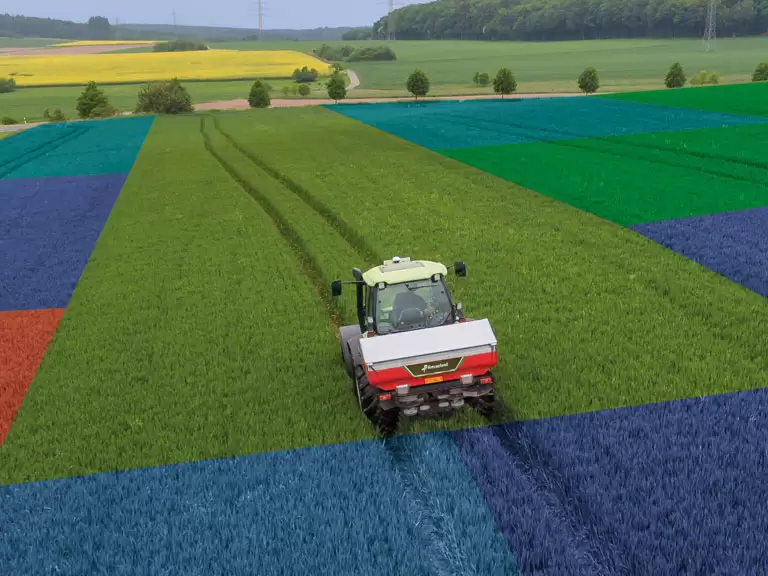

1. Automated sampling for variable rate application (0-30 cm) using specialized sampling equipment and an automatic probe. Determining variations in nutrient reserves by zone within a block by taking four times as many samples compared to standard (ISO) sampling. Each user gets access to information about: the exact path of the samplers; the location of the cells from which soil samples are taken within the boundaries of each individual block.
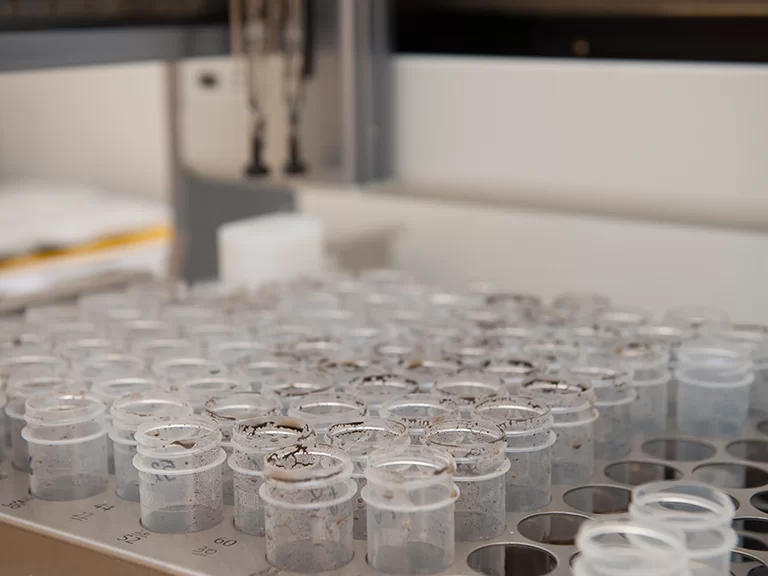
2. Soil analysis in the specialized NIC Agro Service laboratory, accredited according to BDS standards.
Analysis of the following indicators:
- soil reaction (pH);
- nutrients (total mineral nitrogen – ammonium N-NH4 and nitrate nitrogen N-NO3), available phosphorus (P2O5), exchangeable potassium (K2O), available forms of calcium (CaO), magnesium (MgO), sulfur (S), sodium (Na2O), iron (Fe), copper (Cu), zinc (Zn), manganese (Mn), and boron (B).
What do we do?
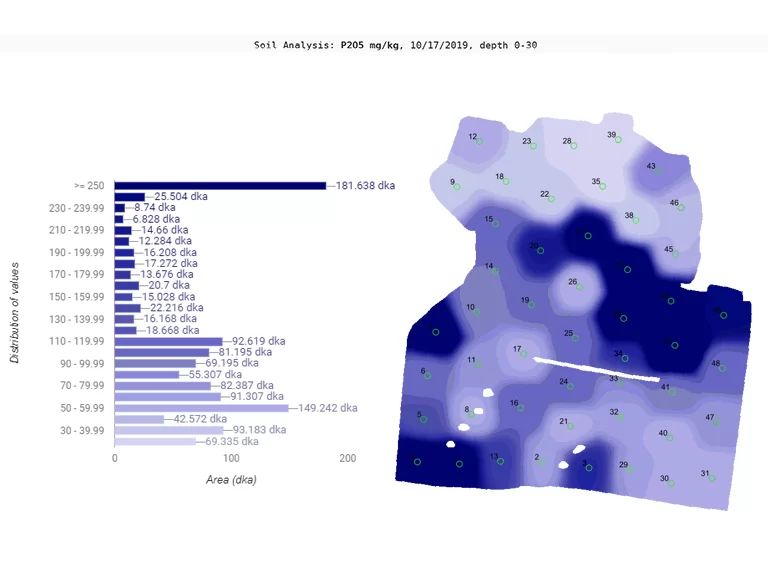
3. Creation of digital agrochemical maps, containing information on the distribution of the following indicators: soil reaction (pH), nitrogen, phosphorus, and potassium – only for the first year of the subscription.
What do we do?
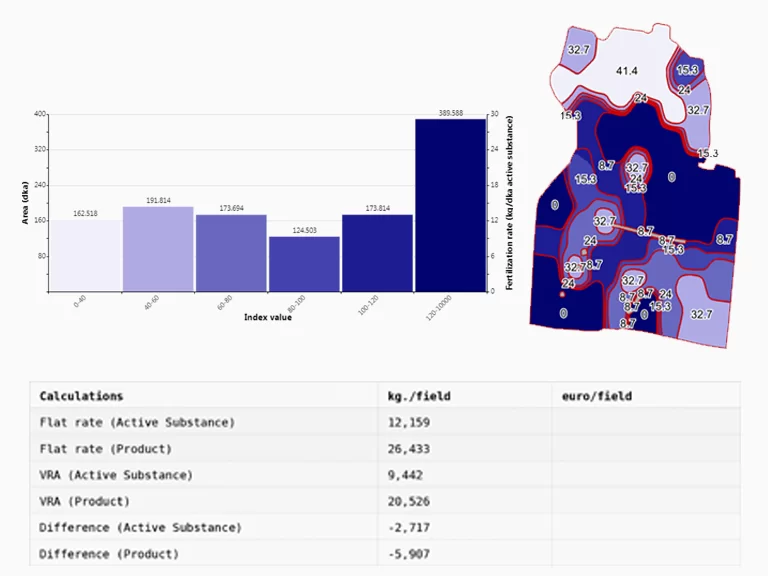
4. Preparation of a balanced fertilization plan The NIC Agro Service agronomy team creates a balanced fertilization plan for each plot and crop, based on the principle of applying higher amounts of a given element in nutrient-poor zones, while reducing or eliminating fertilization in more nutrient-rich areas.
5. Preparation of variable rate fertilization prescriptions – for phosphorus and/or potassium application. Creation of a VRA map in a digital format that can be imported into a Trimble navigation display.
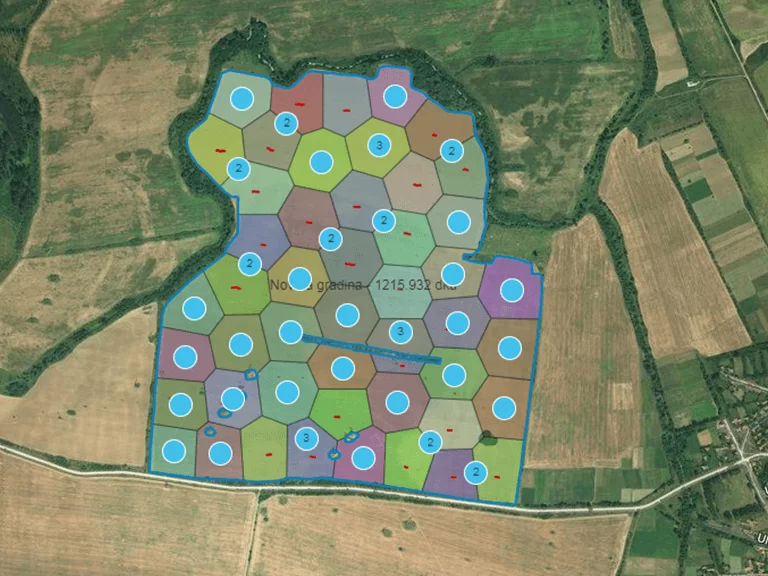
6. In-season control sampling – one plant sample and one corresponding soil sample from each block. Tissue analysis provides information on the current nutritional status of the plants and helps confirm or rule out visually diagnosed symptoms. Control samples are analyzed for nitrogen, phosphorus, potassium, calcium, magnesium, sulfur, sodium, iron, copper, zinc, manganese, and boron. The agronomy team monitors crop health and prepares a report with comments on the results and guidance for subsequent actions.
7. Post-harvest control soil sampling – 20% of the initial number of samples. Based on the results, NIC Agro Service agronomists prepare fertilization recommendations for the next growing season.
8. Preparation of variable rate fertilization prescriptions for the next growing season.
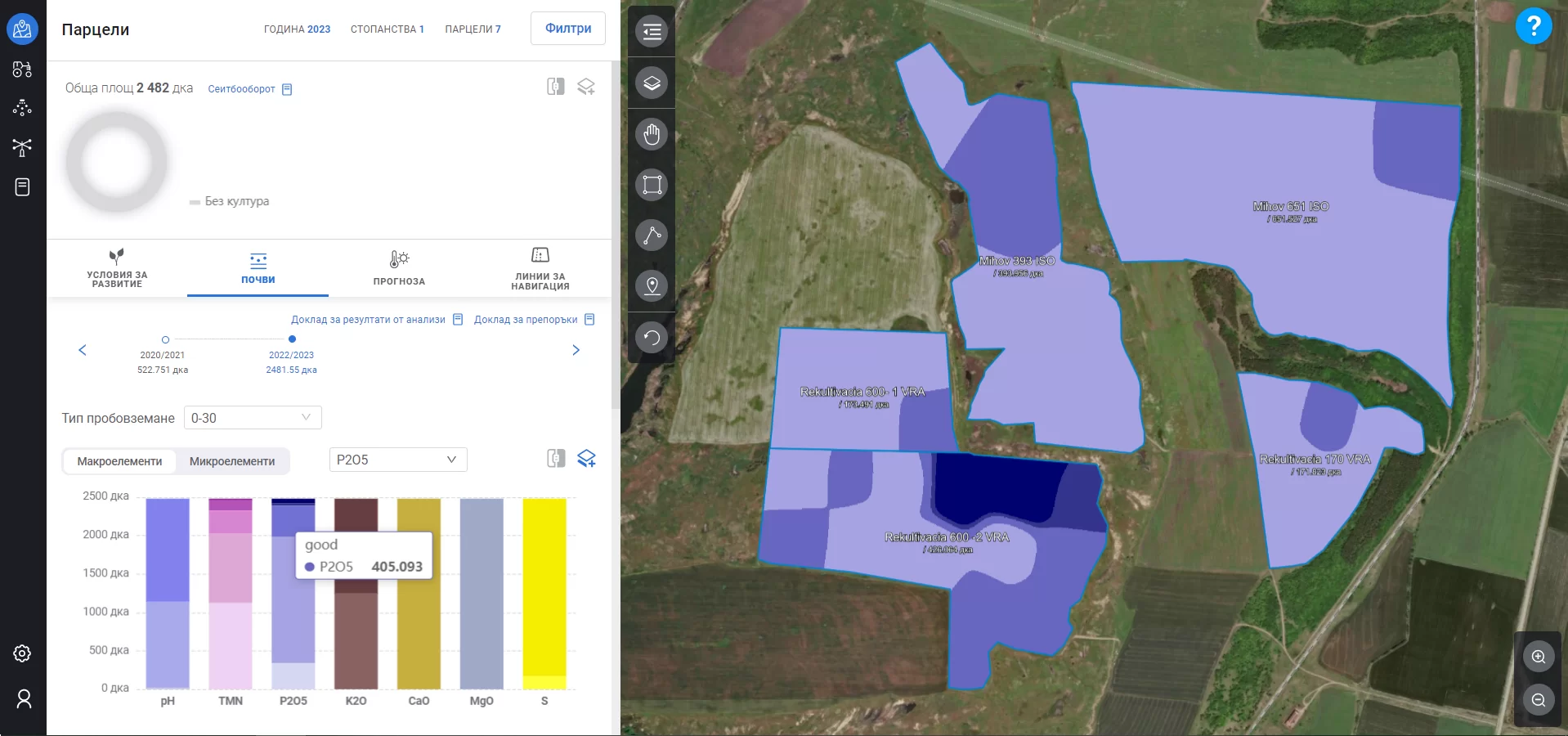
All AgroBalance service users receive access to the Agrimi crop monitoring platform, where they can visualize:
- the route and soil sampling points;
- digital agrochemical maps showing the nitrogen, phosphorus, potassium, and pH levels of the respective plot
- digital maps for variable rate fertilizer application.
Contact us


